
Helping Gul Plaza Businesses Rebuild Digitally After the Fire
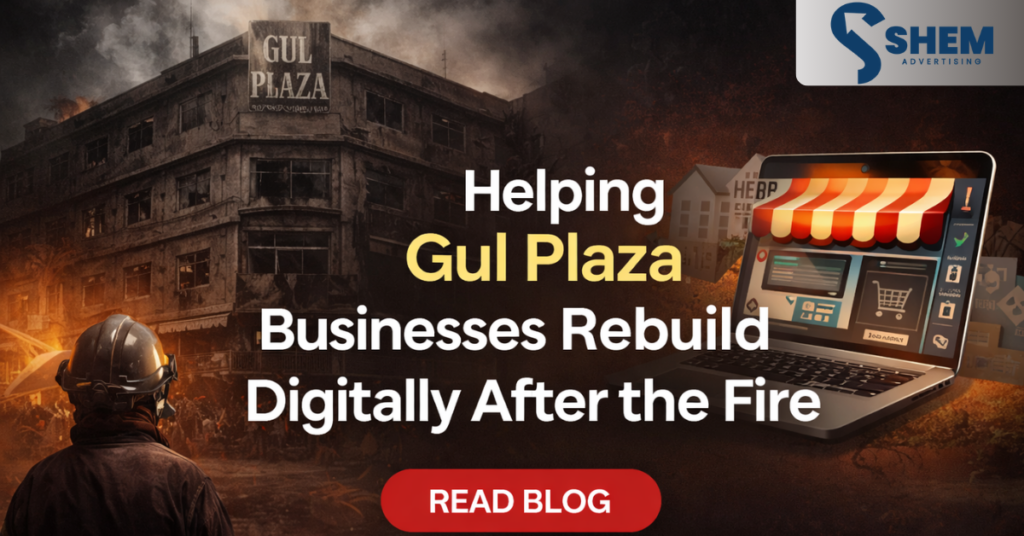
The recent fire incident at Gul Plaza, Karachi, has caused significant disruption for hundreds of small and medium-sized businesses operating in the area. While the immediate focus has rightly been on safety and recovery, the long-term economic impact on shop owners cannot be overlooked.
For many traders, Gul Plaza was more than a physical location—it was the foundation of their livelihood. Inventory losses, temporary closures, and reduced footfall have created serious cash flow challenges. In such circumstances, rebuilding does not stop at repairing walls or reopening shutters. It also requires rebuilding customer access, trust, and revenue channels.
In today’s market, a strong digital presence is no longer optional. For businesses affected by the Gul Plaza fire, going digital can be a practical and sustainable way to stay operational, reconnect with customers, and begin the recovery process—even while physical restoration is still underway.
At Shem Advertising, we believe digital support during times like these must be ethical, structured, and growth-focused, not opportunistic. This article explains why digital recovery matters, common mistakes to avoid, and how affected businesses can move forward responsibly.
Why Going Digital Is Critical After Such Incidents
1. Cash Flow Disruption Requires Immediate Alternatives
When physical operations are interrupted, daily sales often stop instantly. Rent, salaries, and supplier payments, however, do not. A digital platform—such as a basic website, WhatsApp ordering system, or online catalog—can help businesses continue generating inquiries and orders even during partial shutdowns.
Digital channels offer:
- Faster access to customers
- Lower operating costs compared to physical-only operations
- Immediate visibility beyond a single location
2. Customer Loss Is Not Permanent—If You Act Quickly
After a crisis, customers often assume a business is closed permanently unless informed otherwise. Without an online presence, affected shop owners risk losing loyal customers simply due to lack of communication.
A functional website or Google presence allows businesses to:
- Update customers about reopening timelines
- Share alternate contact methods
- Accept inquiries and orders remotely
3. Trust Rebuilding Happens Online First
In uncertain times, customers look for reassurance. A professional digital presence signals stability, seriousness, and continuity. Even a simple but well-structured website helps restore confidence that the business is active and reliable.
4. Local + Online Hybrid Recovery Is the New Reality
Physical shops may reopen gradually, but digital channels can operate immediately. The most resilient businesses adopt a hybrid model, combining local trade with online reach to reduce dependency on a single revenue source.
Common Mistakes Businesses Make After a Crisis
1. Relying Only on Physical Reopening
Many shop owners focus entirely on reopening their physical store, assuming customers will automatically return. Unfortunately, market behavior has changed. Without digital visibility, businesses remain vulnerable to future disruptions.
2. Accepting Low-Quality “Free Websites”
In crisis situations, offers of “free websites” can seem attractive. However, many such solutions:
- Do not provide ownership of the website or content
- Are built on restricted platforms
- Lack scalability, security, or SEO readiness
- Create dependency on the service provider
What appears free initially may become costly later.
3. Operating Without a Digital Strategy
A website alone is not a strategy. Without planning for customer acquisition, communication, and long-term growth, digital efforts often fail to produce results. Businesses need clarity on how digital tools will support actual sales recovery.
How Ethical Digital Support Should Look
At Shem Advertising, we believe responsible digital support must meet the following principles:
Transparency
Businesses must clearly understand what is being offered, what is included, and what is not. There should be no hidden costs or vague commitments.
Ownership of Digital Assets
The website, domain, content, and data should belong to the business owner—not the agency. True digital empowerment comes from ownership.
Scalability
Any digital setup should allow future growth—whether that means adding products, integrating payments, running ads, or improving SEO.
Long-Term Growth Mindset
Ethical support focuses on sustainability, not short-term publicity. The goal should be helping businesses rebuild revenue streams, not creating dependency.
Shem Advertising’s Support Initiative for Gul Plaza Businesses
In response to the Gul Plaza fire, Shem Advertising has launched a structured digital support initiative designed specifically for affected shop owners.
This initiative is not positioned as charity, but as professional assistance to help businesses regain stability and rebuild sales through digital channels.
What the Initiative Includes
- A professionally developed business website or digital presence
- Basic structure optimized for mobile users
- Clear contact integration (WhatsApp, phone, inquiry forms)
- Guidance on digital best practices for recovery
Who Qualifies
- Shop owners directly affected by the Gul Plaza fire
- Small and medium-sized businesses seeking digital recovery
- Businesses committed to owning and maintaining their digital assets responsibly
How This Helps Rebuild Sales
- Enables continued customer communication
- Provides a platform for online inquiries and orders
- Builds a foundation for future digital marketing efforts
This approach ensures businesses are not left with temporary solutions but with a digital foundation they can grow independently.
Free Website vs Strategic Digital Foundation (A Practical Comparison)
| Aspect | Free Website Approach | Strategic Digital Foundation |
|---|---|---|
| Ownership | Often restricted | Full ownership |
| Scalability | Limited | Built for growth |
| SEO Readiness | Minimal | Structured for search |
| Long-Term Cost | Hidden | Transparent |
| Business Control | Low | High |
This comparison is not about criticizing offers, but about educating business owners to make informed decisions that support long-term recovery.
A Realistic Digital Recovery Roadmap
Week 1–2: Establish Online Presence
- Launch website or digital page
- Set up WhatsApp communication
- Update customers with accurate information
Month 1: Generate Leads
- Optimize Google visibility
- Enable inquiry-based sales
- Begin basic content updates
Month 2–3: Scale with Ads and SEO
- Introduce targeted digital ads
- Improve search visibility
- Build consistent customer acquisition channels
This phased approach reduces risk while allowing gradual, controlled growth.
Call to Action: Take the First Responsible Step Forward
If your business has been affected by the Gul Plaza fire and you are looking for ethical, professional digital support, Shem Advertising is here to help.
We encourage business owners to take informed steps—focused on ownership, transparency, and long-term stability.
Visit https://shemadvertising.com/
Or contact us directly via WhatsApp through our website to discuss eligibility and next steps.
Support is limited to ensure quality and fairness.
Internal Linking Suggestions
- Digital Marketing Services
- Website Development Services
- SEO Services in Pakistan
- WhatsApp Marketing Solutions
FAQ (Schema-Ready)
Q1: Is Shem Advertising offering completely free websites?
We offer structured digital support with transparency, ensuring business owners retain ownership and scalability.
Q2: Who is eligible for this initiative?
Businesses directly affected by the Gul Plaza fire in Karachi.
Q3: Will I own my website and content?
Yes. Ownership remains with the business owner.
Q4: Can this help generate sales quickly?
Digital presence enables inquiries and customer communication, which supports recovery.
Q5: Is this a limited-time initiative?
Yes. Support is limited to ensure quality delivery and ethical implementation.
Final Note
This article is written with respect for affected families, business owners, and the broader community. The intent is not promotion through tragedy, but responsible digital leadership during recovery.